









Pancreatic Cancer Treatment
Pancreatic Cancer Treatment at GEM Hospital
Pancreatic cancer begins when abnormal cells grow within the pancreas. Because its early symptoms can be mild or unclear, the condition is sometimes found only after it begins affecting nearby organs.
Treatment depends on where the cancer is located, whether it has spread and the patient’s general health. Surgery may be possible when the cancer can be completely removed. Other patients may benefit from chemotherapy, radiation or treatment to control symptoms.
At Gem Hospital in Chennai, patients receive coordinated evaluation from doctors experienced in pancreatic and digestive diseases. Our approach to Pancreatic Cancer Treatment in Chennai is personalized according to the diagnosis, stage and individual needs of the patient.
Understanding the Pancreas
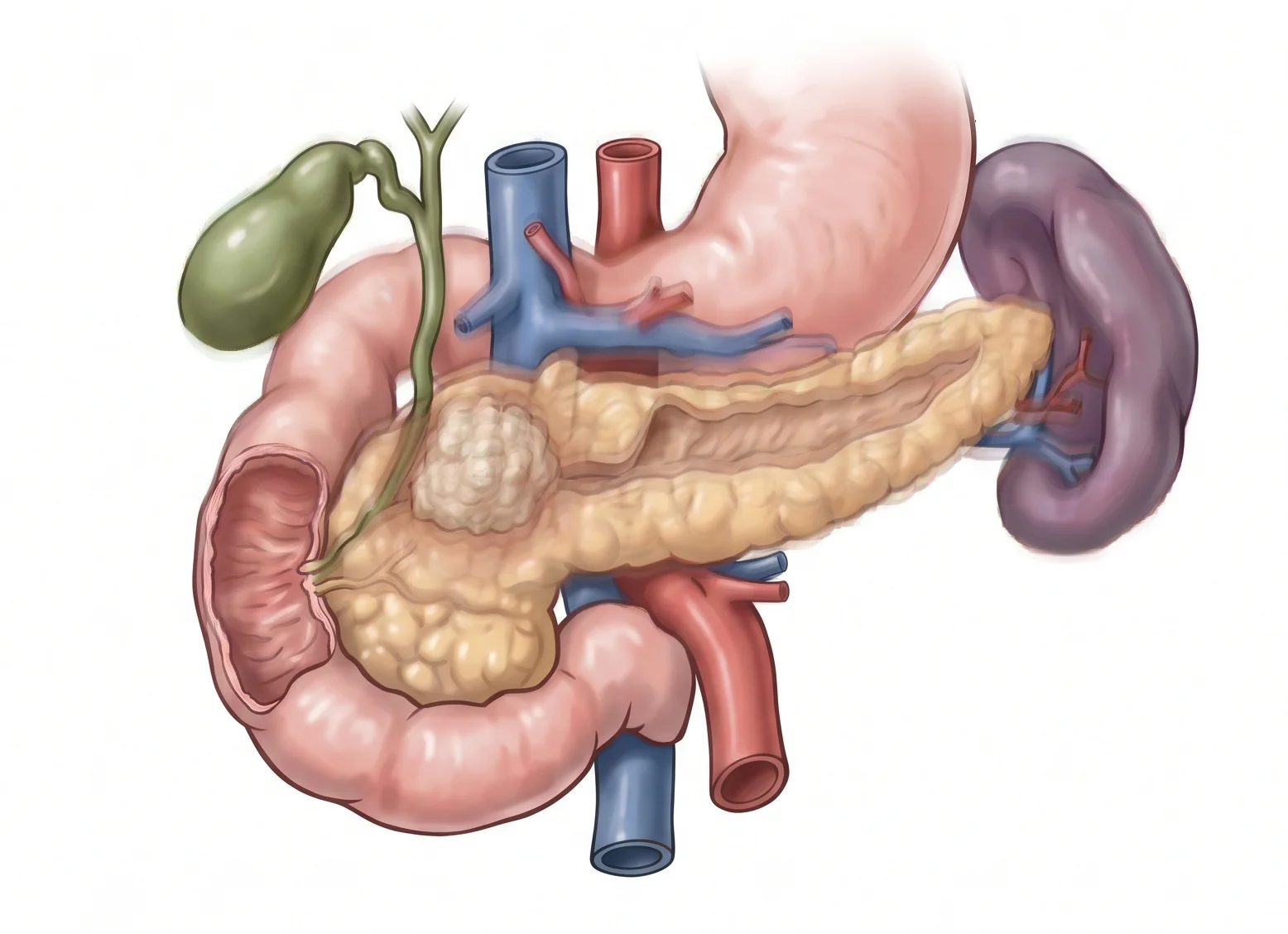
The pancreas is an organ located behind the stomach. It has two important functions:
- It produces juices that help digest food.
- It makes hormones, including insulin, that help control blood sugar.
Most pancreatic cancers begin in the cells that produce digestive juices. Pancreatic neuroendocrine tumours begin in hormone-producing cells and may require a different treatment approach.
Symptoms That Should Be Checked
Pancreatic cancer may not cause clear symptoms during its early stages. When symptoms appear, they can include:
- Yellowing of the eyes or skin
- Dark urine
- Pale or oily stools
- Pain in the upper abdomen
- Pain spreading to the back
- Unexplained weight loss
- Reduced appetite
- Nausea or vomiting
- Unusual tiredness
- New diabetes or unexpected changes in existing diabetes
- Itching caused by jaundice
These symptoms can also be caused by conditions other than cancer. A medical assessment is needed to identify the reason.
People considering Pancreatic Cancer Treatment in Coimbatore should consult a doctor promptly if jaundice, unexplained weight loss or continuing upper abdominal pain develops.
Who Is at Higher Risk?
Having a risk factor does not mean that a person will develop pancreatic cancer. Some patients have no known risk factors.
Factors that may increase the risk include:
- Smoking
- Long-term inflammation of the pancreas
- Diabetes
- Being overweight
- A family history of pancreatic cancer
- Certain inherited genetic conditions
- Increasing age
People with a strong family history may be advised to receive genetic counselling or specialist monitoring.
Your Diagnostic Journey
A pancreatic cancer diagnosis usually involves several steps. Each test answers a different question about the tumour.
Step 1: Consultation and blood tests
The doctor reviews the symptoms, medical history and family history. Blood tests may check liver function, bilirubin, blood sugar and general health.
A blood marker called CA 19-9 may also be measured. This test cannot confirm pancreatic cancer by itself, but it may provide useful information when considered with scans and other results.
Step 2: Detailed scans
A CT scan is commonly used to examine the pancreas and nearby blood vessels. MRI or a special bile-duct scan may provide additional information.
The team planning Pancreatic Cancer Treatment in Chennai uses these images to understand the size and location of the growth and whether surgery may be possible.
Step 3: A closer examination
An endoscopic ultrasound uses a thin flexible tube passed through the mouth to obtain close-up images of the pancreas.
A small tissue sample may be collected during this procedure. This sample is examined in a laboratory to confirm whether cancer cells are present.
Step 4: Understanding whether the cancer has spread
Additional scans may be needed to check the liver, lungs, lymph nodes and other nearby areas. This process is known as staging.
At Gem Hospital Coimbatore, the results are reviewed together to create an appropriate care plan. Patients seeking Pancreatic Cancer Treatment in Coimbatore are guided through the findings in clear, simple language.
How Is Pancreatic Cancer Classified?
Instead of focusing only on stage numbers, doctors often consider whether the tumour can be removed safely.
Removable cancer
The cancer appears to be confined to an area that can be completely removed through surgery.
Borderline removable cancer
The tumour is close to or touching important blood vessels. Treatment may begin with chemotherapy, with or without radiation, before surgery is reconsidered.
Locally advanced cancer
The tumour has grown around nearby structures or major blood vessels and cannot currently be removed completely.
Cancer that has spread
The cancer has reached another part of the body, such as the liver, lungs or abdominal lining.
The treatment goal and available options differ for each group.
Building the Right Treatment Plan
Pancreatic cancer care may involve more than one type of treatment.
Surgery
Surgery offers the main opportunity to remove pancreatic cancer completely, but it is suitable only when the tumour is removable and the patient is fit enough for a major operation.
The type of surgery depends on the tumour’s location.
Whipple procedure
The Whipple procedure is commonly used for tumours in the head of the pancreas. It removes the affected part of the pancreas along with nearby connected structures. The digestive system is then carefully reconnected.
Surgery for the body or tail of the pancreas
If the tumour is in the body or tail, that portion of the pancreas may be removed. The spleen may also need to be removed.
Total pancreas removal
Removal of the entire pancreas is required only in selected cases. Patients will need lifelong insulin and digestive-enzyme support afterward.
Surgery may be performed using open, laparoscopic or robotic techniques depending on the patient and tumour. Minimally invasive surgery is not suitable for every case.
The team providing Pancreatic Cancer Treatment in Chennai will explain the proposed operation, its benefits, possible risks and expected recovery.
Chemotherapy
Chemotherapy uses medicines to destroy cancer cells or slow their growth.
It may be given:
- Before surgery to shrink or control the tumour
- After surgery to reduce the risk of cancer returning
- For locally advanced cancer
- When cancer has spread
- To relieve symptoms and help maintain quality of life
The medicines used depend on the patient’s health, previous treatment and cancer characteristics.
Radiation therapy
Radiation uses focused energy to damage cancer cells. It may be combined with chemotherapy in selected patients to control the tumour or relieve symptoms.
Radiation is not required for every patient.
Targeted treatment and immunotherapy
A small number of pancreatic cancers have particular gene changes that may respond to targeted medicines or immunotherapy.
Genetic or tumour testing may be recommended to find out whether these options are relevant. These treatments are not suitable for all pancreatic cancers.
Treating Jaundice and Other Symptoms
Pancreatic cancer can block the bile duct and cause jaundice. A small tube called a stent may be placed inside the blocked duct to help bile flow.
This is commonly performed using an endoscopic procedure called ERCP. If ERCP is not possible, another drainage method may be considered.
Other supportive treatments may include:
- Pain relief
- Medicines to replace digestive enzymes
- Diabetes management
- Anti-nausea medicines
- Nutrition support
- Treatment for itching
- Emotional and psychological support
Supportive care can be provided alongside cancer treatment at any stage.
Patients receiving Pancreatic Cancer Treatment in Coimbatore may need help with digestion, weight loss and maintaining strength during treatment.
Nutrition During Pancreatic Cancer Care
Pancreatic cancer and its treatment may make it harder to digest food or maintain body weight.
Signs of poor digestion can include:
- Oily or floating stools
- Bloating
- Frequent bowel movements
- Abdominal discomfort after eating
- Continued weight loss
The doctor may prescribe pancreatic enzyme capsules to help the body digest food. A dietitian may also recommend smaller meals, suitable protein sources and ways to increase calorie intake.
Patients should not begin a highly restrictive diet without medical advice.
What to Expect After Surgery
Recovery from pancreatic surgery takes time. Patients are monitored for bleeding, infection, changes in blood sugar and digestive problems.
Care after surgery may include:
- Pain management
- Gradual return to eating
- Blood sugar monitoring
- Digestive enzyme capsules
- Nutrition support
- Gentle physical activity
- Follow-up scans and blood tests
- Further cancer treatment when recommended
The recovery period differs for every patient.
Why Choose GEM Hospital for Pancreatic Cancer Care?
Pancreatic cancer treatment requires close coordination between different specialists.
GEM Hospital provides:
- Evaluation by pancreatic and digestive-disease specialists
- CT, MRI and endoscopic ultrasound support
- Tissue sampling and laboratory diagnosis
- Pancreatic cancer surgery
- Endoscopic treatment for bile-duct blockage
- Medical cancer treatment planning
- Pain and symptom management
- Nutrition and digestive support
- Follow-up throughout treatment
At Gem Hospital in Chennai, each case is evaluated to decide which treatment or combination of treatments is suitable. Our approach to Pancreatic Cancer Treatment in Chennai prioritizes clear explanations, informed decisions and coordinated care.
Expert Video Guides on Pancreatic Cancer
Watch senior HPB surgeons and surgical specialists from GEM Hospital explain early warning signs, diagnostic screening tests, surgical procedures including Whipple resection, and frequently asked patient queries.
Pancreatic Cancer: Overview & Treatment Insights | Dr. P. Senthilnathan
Surgical Procedures for Pancreatic Cancer | Dr. Nalankilli
Screening & Diagnostic Tests for Pancreatic Cancer | Dr. P. Senthilnathan
Frequently Asked Questions on Pancreatic Cancer | Dr. P. Senthilnathan
Book a Pancreatic Cancer Consultation
Early evaluation is important when a person develops jaundice, unexplained weight loss or continuing pain in the upper abdomen or back.
Book an appointment at Gem Hospital Coimbatore for diagnosis, a second opinion or Pancreatic Cancer Treatment in Coimbatore.
Bring previous scan images, blood results, biopsy reports and treatment records whenever available.
Frequently Asked Questions
Early pancreatic cancer may not cause obvious symptoms. Possible warning signs include jaundice, upper abdominal or back pain, unexplained weight loss, poor appetite and new changes in blood sugar.
No single blood test can confirm pancreatic cancer. Diagnosis usually requires scans and, in many cases, a tissue sample.
Some pancreatic cancers may be treated with the aim of cure when they are found early and can be completely removed. Outcomes depend on the stage, tumour features and overall health.
No. Surgery is possible only when the cancer can be safely and completely removed and the patient is fit for the operation.
It is an operation commonly used for a tumour in the head of the pancreas. The affected part of the pancreas and nearby connected structures are removed and the digestive system is rejoined.
Chemotherapy is commonly recommended after pancreatic cancer surgery, but the plan depends on recovery, laboratory findings and overall health.
A tumour near the head of the pancreas can block the bile duct. This causes bilirubin to build up, making the skin and eyes yellow.
A stent is a small tube placed inside a blocked bile duct to help bile drain. It may relieve jaundice and itching.
Yes. A second opinion can help confirm the diagnosis and treatment plan. Bring all scans, biopsy reports and previous medical records.
It can. Some patients do not produce enough digestive enzymes and may need enzyme capsules and nutrition support.